A few weeks ago, I started publishing my book on this site. My intent was to finally, actively, truly work toward publishing it in full digital and physical formats, instead of cowing to those fears that always tell you: It’s not good enough. It’ll never be good enough. There’s a point where the author has to listen to voices that aren’t internal. When Trusted Readers regularly provide positive feedback and encouragement, that should carry more weight.
It does carry more weight.
This post isn’t simply an announcement, though you can start reading this chapter here: Prologue: The Children’s Gifts. Consider it a behind-the-scenes look at how a chapter and book come to life. I might not have this context for every chapter I release, but we’ll see. It’s very easy for a writer to procrastinate when fun new post ideas come to mind.
Prologues have been integral to fantasy books for decades. Thoughts on this are cyclical: from “must-have” to “cliche” to “must-have” and around again. IMO, if your writing is chasing what’s fashionable, you’re doing your story a disservice. You’re also not being honest with your Readers, which to me, is the more egregious matter.
Early on, I knew I wanted a prologue for each of my books, and they would all have a corresponding epilogue, as well. This was part of a larger decision: each book is told from the hero’s point of view. You know what they’re thinking, you see the world through their biases, you see how they grow based on their reactions to stress and other factors. Which meant I had a problem for the antagonists of the series. How do I help the Reader understand the machinations of their schemes?
I didn’t want to keep any of that hidden from Readers. In Lord of the Rings, you get a limited sense of Sauron’s plans. The Harry Potter series offers a little more visibility to Voldemort through a prologue or monologue. I wanted more for my Readers.
And so, the bookends of the story are devoted to the primary antagonists of the series: the dark god Delosh and Its thrall, the Mellifluent, the last survivor of a genocide committed by its master. This is where I communicate their motivations and plans, but also how the actions of our heroes affect those plans.
When I wrote the prologue, I took inspiration from the cinematic opening to the Fellowship of the Ring and the writing of Tolkien himself. It was formal and grand; it had depth and history; and it had necessary exposition to set up the entire series, not just the first book. It was heavy.
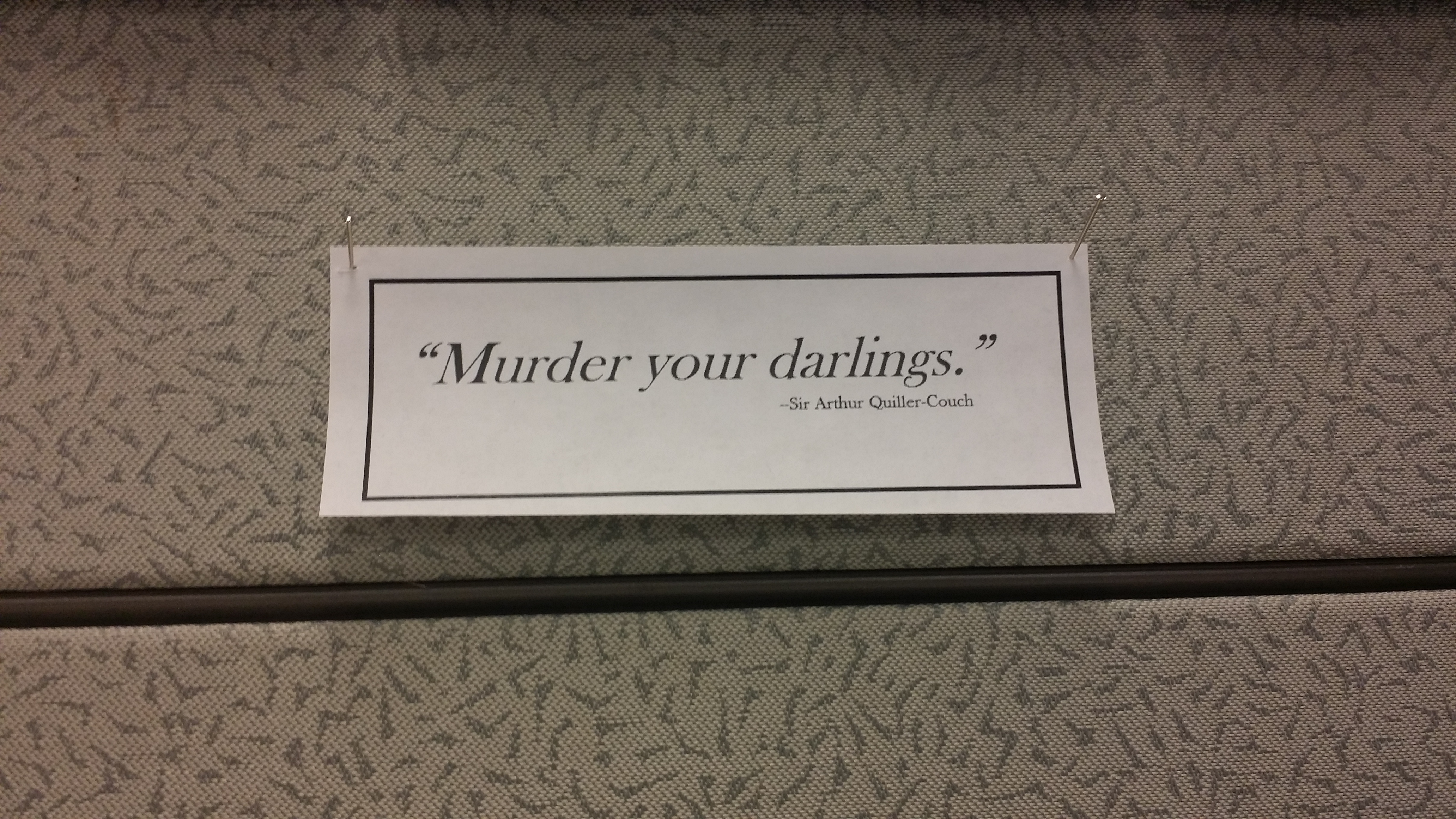
It was too much. And Trusted Readers were right to call me on it.
Continue reading →


 1.
1. 



 The Lost Royals