Considering Reader Needs

This post is about a 6-minute read.

I’d started a different post to talk about my book launch – OCTOBER 1! – and got sidetracked by a worthwhile question. So instead, I decided to write about helping other humans. This post will give you some starting information about digital accessibility.

Accessibility means designing products, places, services, and digital tools so that everyone can use them, regardless of their physical or cognitive abilities.

“What’s good for a few can be good for all.”

– the witch, in Tildy Silverleaf and the Dungeon of the Dreadwyrm

Am I using a good color for people with eyesight issues?

I’ve had a basic style guide for my website pretty much since the beginning. I’ve made updates here and there, and I’ve recently been wondering if the text color for links popped enough. I’ve been using a deep green, wanting to reflect the forest setting of Tildy Silverleaf and the Starfall Omen.

OK. Hypothesis; time to test.

I started experimenting with lighter greens, and for the most part, they seemed like an improvement. Before I changed my style guide, however, I wanted to check the accessibility score of the color.

  • This random text helps illustrate how a color might pop or blend into a white background. It’s important to consider color blindness or other eye conditions that might make the font difficult to read.
  • This random text helps illustrate how a color might pop or blend into a white background. It’s important to consider color blindness or other eye conditions that might make the font difficult to read.
  • This random text helps illustrate how a color might pop or blend into a white background. It’s important to consider color blindness or other eye conditions that might make the font difficult to read.

I used Gemini just the way I’d use Google Search, and here’s how it advised me to improve my website experience for other humans:

Gemini: Yes, the bright green #37B904 presents significant accessibility concerns across contrast ratios and color vision deficiency (color blindness). 1. Color Contrast Failures (WCAG 2.1): The relative luminance of #37B904 sits in a mid-tone “dead zone” where it fails accessibility standards against both light and dark backgrounds. 2. Red-Green Color Blindness (Deuteranopia & Protanopia). Recommended Alternatives: Use a darker green to hit the 4.5:1 ratio minimum (e.g., #247B02 or #1E6B02).

Let me translate. The #37B904 is the digital code for this particular color green. WCAG is a set of standards to ensure online content can be viewed by humans with a variety of conditions. If you want a little more info, read the entire post.

So, I tried Gemini’s suggestions and a few other colors. Then I measured my original green, which met or exceeded a number of guidelines and scored better than any other test. So for now, I think I’ll keep my choice, but also continue to underline all links (in my lifetime I’ve seen the invention of hyperlinks, which used an underlined light blue font, and I’ve seen modern sites that use no unique styling to indicate a clickable link, which feels like a miss, even if it makes the overall page a little cleaner-looking). Between my color and underlining, I’ve got 2 different ways to help users interact with my site. It feels meaningful, but it’s also a reminder that there are probably other things I can do to improve.

I hope this helps! If you want to learn a little more about accessibility, hex codes, and why an author should care, read on!

–Mike


What is WCAG?

The Web Content Accessibility Guidelines are the international rules for making digital content usable for people with all kinds of abilities. The guidelines are broad, many, and updated regularly, which can make following every single one a very challenging task. Understanding even a little bit of this, however, will also ensure you’re not doing funky things that impact every reader. Such as putting grey text on a mint background, which would look like this (it says, “which would look like this.”).

What are Hex colors?

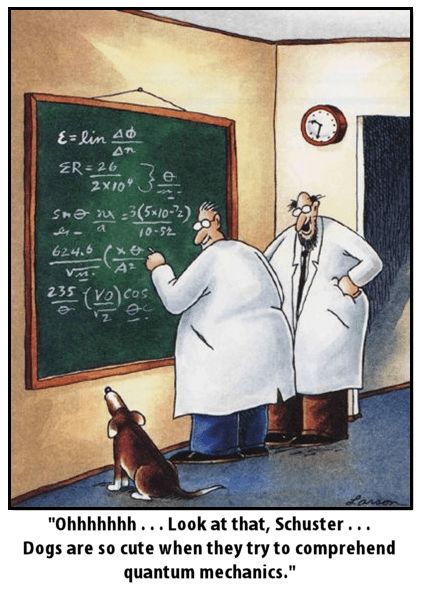
A classic Far Side cartoon in which a dog considers the chalk board that two scientists are using. One says, "Ooooooh....Look at that Schuster....Dogs are so cute when they try to comprehend quantum mechanics."

In school, many of us learned the colors of the rainbow thanks to Mr. ROY G BIV (red, orange, yellow, green, blue, indigo, violet). So, I’m going to level up your knowledge just a smidge.

A hex color is a six-digit code used in digital design and coding to represent a specific color, starting with the basic red, blue, green (RGB) palette. Hex is short for hexadecimal, which is a 16-digit numbering system (0123456789ABCDEF), unlike our standard decimal system (1-10); it’s how we tell our masters the machines which very specific color we want.

  • Format = #RRGGBB
  • Lowest intensity = 00
  • Highest intensity = FF
  • #000000 is white
  • #FFFFFF is black

I originally went to college for computing programming, and hexadecimal still gives me a headache.

Dammit, Jim, I’m a writer not a software developer! Why, oh why would an author care about this stuff?

It would be very easy to say, “I just wanna write” or “this is too complicated”. My response would be, as an author I have a responsibility to connect with as many humans as possible, and since we live in an age where answers can be delivered instantaneously, a little AI Q&A can go a long way to informing us. I’m sharing this info to give others a starting point from which they can make their own decisions about learning and changing. Do some research; do some good!

And when it comes to publishing, the more production aspects you’re doing yourself, the more you’ll need to understand. I do everything on the website and I self-publish. RGB and Hex are for digital (WordPress uses Hex; MS Word uses both). Actual print, y’know, on paper, has different color standards: CYMK (cyan, yellow, magenta, black). When I was exporting my cover from Canva, this was an important to select.

Do you or I need to be an expert on any of this? No, but new knowledge is a good thing in my opinion. Helping others is even better. It could also save you some missteps on your writing journey, and gods know there are a heckuva lot of steps.


(C) Michael Wallevand, September 2026
decorative image of twisting ivy vines and leaves

So Mike, How Many Books Ya Working On?

Oh, Ok! That’s a good question.

Over the years, I’ve spoken about starting Project Two and Project Three, and sometimes it’s hard to keep track. What are the chances my answer is “more than one”?

A physical proof copy of TILDY SILVERLEAF AND THE STARFALL OMEN just shipped and it’s scheduled to arrive Monday! I can hardly begin to imagine what it will feel like to open that box and hold my book for the first time. This journey started more than ten years ago, and many times I thought the day would never come. To be honest, many other times I considered giving up and destroying the book due to soul-crushing self-doubt. I imagine it will take a few days to fine-tooth-comb the print to verify it’s ready for sale.

I honestly can’t believe I’m finally at this point.

So that’s technically one book. Number two is the ebook version of that. You might think that would be an easy task, considering I already have a finished manuscript, but they require different formatting. Some of that is a real pain in the rear because of the effort I put into the interior design. I also lose control of the font because readers can choose their own. That’s, sigh, not the end of the world, but I used different fonts a few times to create an experience for readers. Fortunately, my favorite example of this, “Thems Trolls” survived due to some creative thinking I’d done when I wrote that verse a few years ago. Once I wrangle the formatting, we’re ready to publish. So, that’s two books I’m working on.

Of course, I’m not stopping there. Oh no. This is a millennia-spanning epic fantasy tale with many stories to tell.

Last week, I started a novella that spawned from some tough choices in Starfall Omen. My original storytelling strategy had a prologue and epilogue for each book that told the tale of a third character: the Mellifluent, the indentured servant of the Dark God, who had its own schemes involving the royal children, who are now known as Tildy and Samor. But, “murder your darlings” they say, and the prologue was a regular source of criticism by Trusted Readers. So it had to go. It was slowing down the opening of the book significantly. As they say in Monty Python:

GIF from Monty Python and the Holy Grail, which shows an impatient army shouting "Get on with it!"
Continue reading

Wait…you’re also a lyricist?

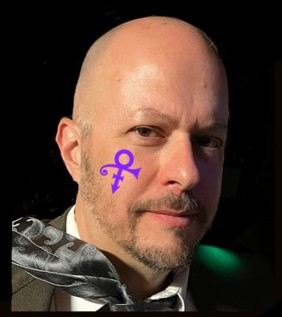
Your friendly neighborhood writer with the Prince symbol on his face.

Like a lot of creative people, I’m curious about varying mediums and challenging myself. Until recently, I hadn’t shared the lyrical side of my repertoire, but yeah, I’ve written a few songs. It has always been about entertaining myself, exploring other kinds of writing, and keeping my skills sharp.

Genres include hip hop in the style of Prince’s 90s NPG era, hardcore punk, and country. All of that is going to be a surprise to people who know me.

Wanting to focus more on my novels, I hadn’t been putting effort into doing more with my lyrics nor have I spent much free time working on them. Writing is a job, after all, and you want to put the most time into the most viable projects. Suddenly, however, maybe I did.

As I’ve written recently in Collaboration like peanut butter and chocolate, Sharing is caring…and inspiring, and Writing Exercise – An unexpected prompt, I’ve unexpectedly found myself as one half of a songwriting duo.

So I started writing more songs. A lot more. In the last six weeks, I’ve started 25, completing 10. My partner has written new music for at least four songs, though honestly, his feels like the more difficult and time-consuming part of the deal.

Already, we have 2 songs that I’m absolutely thrilled with, even if we’ve got some work to do. The musical arrangement took lyrics I was happy with and turned them into songs I think are really special: the sad, haunting Let Me Down Easy and the powerful love song Did You Run?

Here are the other eight I’ve submitted to him:

  • YOU’RE OTHER – hardcore punk song yelling at the bigots
  • The Coyotes Roam But They Ignore The Bones – folk song about 2 murdered girls hidden at a New Mexico ranch
  • Together and Apart – two people who stayed together longer than they should have
  • A Day Survived Is Yesterday – sometimes you just need to get through that dark day
  • I’m Leaving You Behind – a person leaves the love who’s using them
  • Unrequited – an infatuated person slowly comes to terms with their one-sided love
  • Black Dog, Cry – a take on the Beatles’ Black bird (yeah, I know) about a sleeping dog who wakes at the sound of an intruder and alerts her family to danger
  • The Garden Bloom – a person is emerging from the darkness of a breakup

Are all of them viable? Who can say! The wonderful thing about collaboration is sparking ideas in each other. As an example, the first music pass at Did You Run? transformed it from a song about a person lamenting a one-night stand to a duet about two people wishing they hadn’t gone their separate ways after meeting on their vacations. Creation is about possibilities, not about sticking to a destination before you know where you really need to go.

Even if all these songs end up falling short of our high standards, we’re on a journey of discovery and learning. And we’ve got plenty of other viable material to work with. Most importantly, we’re having fun collaborating and filling our spare time with something that delights our souls.

Good luck with your own creative endeavors!

–Mike

PS: I’ve added the lyrics work to my Progress Tracker, a calendar that captures changes I’m making to my various creative projects.


(C) Michael Wallevand, June 2026

Writing Exercise – The An-Teak Desk

A writer never knows when inspiration will arrive or from where. Because algorithm, I stumbled upon the podcast of a friend’s wife. It was a clip in which she discussed junk drawers with her friend. They laughed in delight at the idea of the drawer opening up like the wardrobe to Narnia.

An hour later, I had 1,700 words.


Jammie, so nicknamed for her love of footie pajamas, followed her brother Matt up the dim creaking stairs, her eyes fixed on the close-cropped black hair that had earned the slender boy a moniker of his own. “Gramma missed a spot, Matchstick,” she teased, pointing at the tuft on his head.

He reached back and felt for the place, his lips hissing a derisive sound when he found it. “That’s my lucky spot. She says if you find one of those, you’ll be lucky ‘til your next haircut.”

“I think that’s one of those things grown-ups say to hide their mistakes,” she retorted.

He looked over his shoulder as they neared the top of the stairs. “With all that reading you do, I can’t believe you’ve never heard of that.”

“You read as much as I do and I bet you’ve never heard of it, either.”

The dark shape of the heavy oak door emerged from the shadows before them, a dull brass doorknob reflecting the oil lamp at the bottom of the stairs. Instead of reaching for the knob, he turned and looked down at her. “You read way more than I do.”

“Yeah, but you read en-cy-clo-pedias,” she replied, drawing out the enunciation as a sign of reverence. She’d always wanted to enjoy them – knowledge was important, her daddy advised – but she just didn’t have the head for it, her grandma said.

“I didn’t have a choice, you know.”

“But you like them now, right?”

He stared at his sister, her face aglow with wonder and curiosity. Her eyes could drink in all the details of the world, and still her inquisitiveness would not be sated. “I guess. They’re now like reading an old story you know by heart.”

“I know all about that. My books never showed me that symbol you found, though. My stories are all made up, and writers are liars.”

Continue reading
Chapter One available

Chapter One available

As I mentioned in a previous post that announced the Prologue, I’ve started working on publishing my book, Tildy Silverleaf and the Starfall Omen. As I release chapters, I plan to write an accompanying post that provides a behind-the-scenes look at the work. To skip right to reading the new chapter, click here: Chapter One – Spring in Dappledown.

I started my writing with Chapter One, not the Prologue, because getting a feel for my protagonist and her home were crucial to understanding whether I had a story worth pursuing. I needed to establish my unnamed hero, her home, and the witch she reluctantly called “mother”. The ideas flowed effortlessly from thought to word, and Tildy, as she would became known, nearly flew from the page into life.

I had something.

Continue reading
What do you call a book without a cover?

What do you call a book without a cover?

I wish I had a better punchline for that set-up. It’s been a long day.

Let’s try another one: if an author writes a story and it doesn’t have a cover, is it still a book?

OK, OK, now I’m just procrastinating.

In a recent post about publishing my book, I mentioned looking for a cover designer. An online gaming buddy connected me with a graphic artist in Australia named Hoomie. Her portfolio was excellent and I found her to be a consummate professional. And as the conversation progressed…I knew she would be out of my price range. That’s on me: I have champagne tastes and a lite beer budget. It’s unfortunate because I liked her and was excited to see what we could accomplish together.

What I was able to witness, however, was an expert who knew the right questions to ask. It required me to articulate things I knew – things churning about in the cauldron between my ears – but hadn’t put into words. I find this extremely valuable because it’s challenging to distill thousands of hours of writing time into an engaging and succinct description. I’ve written about the importance of it here: Learn about your writing by talking with people.

The following questions are among the things I will continue to contemplate in this and future writing projects.

Continue reading

Writing Exercise: Monday Positivity

I’ve been trying to work on my positivity.

Correction, I’ve been working on my positivity.

CORRECTION: I have improved my positivity.

It’s tough. I have a pragmatic, neurodiverse, and often all-or-nothing view of the world. I like to identify problems and find creative ways to fix them. I’ve often said that the old Lexus commercials of the 1990s especially resonated with me.

a car with martini glasses stacked in a pyramid on its hood
Lexus: The Relentless Pursuit of Perfection

As I’ve matured, I’ve come to understand that this also creates the relentless pursuit of imperfection. Nothing is ever good enough, which often means, things remain bad until they are. It’s a helluva thing to overcome to publish a book. But if I put my “reason mind” to work (If you want to publish, you have to stop puttering about), it begins to drown out the “emotion mind” that’s often loudest in my head (Just one more edit and it’ll be perfect. Just one more. You’re so close. But just one more.)

This morning, I was looking for a way to start my Monday with a positive attitude, which is tough for many of us. Part of our social contract in America is commiserating over the start of the work week. It’s probably a multi-million dollar industry, when you consider all the merchandise dedicated to grumpy Mondays.

I thought back to how good my Friday was. It started with this: A Day Bright, and Full of Promise. It was a simple writing exercise that got my brain moving, and the creative outlet got those feel-goods coursing through my veins.

Instead of simply jumping into work, with who knows what surprises awaiting me, I took a few minutes to jot this down in a coffee shop.

Continue reading

Chapter available: Prologue

A few weeks ago, I started publishing my book on this site. My intent was to finally, actively, truly work toward publishing it in full digital and physical formats, instead of cowing to those fears that always tell you: It’s not good enough. It’ll never be good enough. There’s a point where the author has to listen to voices that aren’t internal. When Trusted Readers regularly provide positive feedback and encouragement, that should carry more weight.

It does carry more weight.

This post isn’t simply an announcement, though you can start reading this chapter here: Prologue: The Children’s Gifts. Consider it a behind-the-scenes look at how a chapter and book come to life. I might not have this context for every chapter I release, but we’ll see. It’s very easy for a writer to procrastinate when fun new post ideas come to mind.

Prologues have been integral to fantasy books for decades. Thoughts on this are cyclical: from “must-have” to “cliche” to “must-have” and around again. IMO, if your writing is chasing what’s fashionable, you’re doing your story a disservice. You’re also not being honest with your Readers, which to me, is the more egregious matter.

Early on, I knew I wanted a prologue for each of my books, and they would all have a corresponding epilogue, as well. This was part of a larger decision: each book is told from the hero’s point of view. You know what they’re thinking, you see the world through their biases, you see how they grow based on their reactions to stress and other factors. Which meant I had a problem for the antagonists of the series. How do I help the Reader understand the machinations of their schemes?

I didn’t want to keep any of that hidden from Readers. In Lord of the Rings, you get a limited sense of Sauron’s plans. The Harry Potter series offers a little more visibility to Voldemort through a prologue or monologue. I wanted more for my Readers.

And so, the bookends of the story are devoted to the primary antagonists of the series: the dark god Delosh and Its thrall, the Mellifluent, the last survivor of a genocide committed by its master. This is where I communicate their motivations and plans, but also how the actions of our heroes affect those plans.

When I wrote the prologue, I took inspiration from the cinematic opening to the Fellowship of the Ring and the writing of Tolkien himself. It was formal and grand; it had depth and history; and it had necessary exposition to set up the entire series, not just the first book. It was heavy.

It was too much. And Trusted Readers were right to call me on it.

Continue reading

Writing Exercise: A Day Bright and Full of Promise

It was time for the school bus. Following Benji, I stepped into a beautiful Autumn morning. As though someone spoke to me, this line popped into my head.

A day bright, and full of promise

I stopped in my tracks, my brain beginning to answer the question I no longer had to consciously put into words: “What happens next?” Even after so many years of writing, I continue to be surprised by the amount of creativity sparked by that simple question. Most notably, What if I paused my writing about the lost prince and started a female-centric story about his sister?

It’s a tip I use not only for writing, but in my office job, as well. “OK, we have an issue. What happens next? And then what?” And so on.

The following is about 2 minutes’ work. It’s a minor piece of writing, but I wanted to capture it because it helped inspire me. It’s about having days ahead of you that you want to spend writing. It’s the promise that you’ll create something worthwhile. It’s the power of positive thinking, if you will.

It’s Hope.

Continue reading
Stories for Whiskey Weekend #3

Stories for Whiskey Weekend #3

OK, I’m going to be completely straight with you. I forgotten I’d been working on this series. It happens. Best laid plans and life gets in the way and all that. LOL

Recently, the previous posts (Post 1, Post 2) have seen an increase in traffic, so I thought I’d share a few other stories. Before I do, let me restate their purpose. For a gaming and whiskey weekend, I’d 3D printed characters for my friends to paint. To serve as inspiration for their characters, I wrote some quick backstories that they could mix n match as they desired. More info can be found here: Prologue: Stories for Whiskey Weekend.

Now, let’s meet Molli and Noe (painting by Whiskey Weekend guys).

Molli McGillman sighed. She stopped her nomad’s journey and studied the young person’s face. Another death. Perhaps, this is the one I can prevent.

One year ago, Molli had taken a strange path through the woods and fallen into a time paradox. Of course, she wouldn’t have put it into those words, and she was barely aware anything had happened. The next day, she came upon a drowned man on the riverbank. Making her way upstream, she heard cries ahead. There struggling in the water, though she told herself it was a different person, was the man whose body she’d seen. A few hours later, she saw him a third time as he crossed the river on slippery rocks.

Continue reading