Inspiration: Chemistry by Semisonic

This post is approximately 900 words and focuses on one of my favorite topics: Music.

Semisonic 1Oh man, I’ve been meaning to write a post like this for awhile. Ideas have been churning in my head for years. Years! I’m excited to finally get to it, and I hope this comes through in my writing! It will be the first in a series that covers storytelling in lyrics and what writers can learn (similar posts can be found here: Influencers). The hardest part, aside from finally taking the time, was choosing which song to cover first. Honestly, in two minutes I could list a hundred songs to write about, but as I listened to a playlist tonight, it came down to two: Prince’s “Starfish and Coffee” and Semisonic’s “Chemistry“.

A friend and former colleague one told me that Dan Wilson was “finest singer/songwriter ever.” As is common with people in the music biz, he said it with a fervor that would suffer no debate. And while I’m not overly familiar with Dan’s solo work, I do know a fair number of Semisonic songs. I find it hard to disagree. Because of that, this is not the only Semisonic track I’ll write about, though for the sake of diversity, I’ll probably write about a number of other songs before I get back to them. Continue reading →

Helping Define Your Company’s Culture

This post is a quick ‘un.

A few weeks ago, I wrote a post entitled Sharing your other work at work in which I described my submission to the Thomson Reuters brand marketing team, who was looking for employees to help showcase and define our culture. It’s part of a greater recruiting effort to bring in top talent from around the globe.

Sharing your writing can be nerve-wracking at the best of times, but there’s a certain other level of anxiety that comes with standing up and saying, “Hey coworkers, I think what I’m doing is important enough to help define our brand to the world.”

Continue reading →

Sharing your other work at work

I work for Thomson Reuters, and in January, our brand marketing team solicited responses from employees around the world. They regularly showcase the people who define our culture, and in this instance, they were interested in our activities outside the office. Since I’m passionate about writing – and <cough> always looking for an opportunity to share and connect with others – I wrote the following submission. Somehow, I managed to keep it under 300 words, which is nearly impossible for a writer writing about the book he’s writing.

Anyhoo, without further ado or digression, here it is: Continue reading →

An illustratration [sic] for the importance of proofing

This post is approximately 600 words, some of which are likely misspelled because that’s what happens when writers talk about typos.

Holy lexicon, do I hate misspellings. When it comes to my own writing, I’m a firm believer in self-flagellation. And I know there’s a special place in dictionary purgatory for self-proclaimed grammar perfectionists and those people who allow typos into published books.

Regardless of how much you’ve typed, or how fast you do it, typos are a way of life. When it comes to typing, I’m a cheetah with 30 years’ experience: bursts of speed followed by periods of rest and reflection. If I’m particularly inspired, I probably reach 120 wpm.

kermit-writing

Continue reading →

Celtic Christmas Poem

When I read ancient tales like Beowulf or the Odyssey, I like to consider the challenges faced by translators. It’s not simply replacing one word for another; in some cases, it’s also preserving the rhythm, often at the expense of what we’d consider ‘standard grammar’. Rhythm is a critical component of memorization, which was essential for stories that passed from mouth to ear, rather than by written page.

I kept that in mind when I wrote this poem in 2005. I put myself in the mindset of a translator struggling to capture the flow of some ancient chant. To me, it’s a combination of science and art, with the latter given preference. You’ll hear similar things in modern music, when the lyricist chooses rhythm over the rules taught in high school English.

Without further preface, my Celtic Christmas poem:


Come, my dear friends and do hearken
And sit by my fire for awhile.
For I am about to regale you
Of the Scourge of the Emerald Isle. Continue reading →

Writing Update: Dec 12, 2017

This post is approximately 700 words.

On December 10, 2015, overwhelmed and underwater in life, I sat at the keyboard to begin writing the first book in The Lost Royals series. It had been years since I’d seriously written, but I recall how quickly the inspiration blossomed again.

Two days ago, the second anniversary passed by, unremarked. When I realized this today, I knew I needed to refocus myself.  Of late, my head has been so far up my own rear end with responsibilities and disappointment and anger and frustration and regret, that I’d taken my eye off the ball. Off the work. Instead taking the opportunity to reflect on how far I’d come – as I’d done last year – I simply forgot about the date.

But at least I did some writing.

My intellectual side knew it wasn’t a big deal, but my emotional side Continue reading →

My Writing Rules Differ From Yours #1

This post is approximately 800 words and talks about grammar. I mean, a lot. Now’s your chance to flee.

venkman

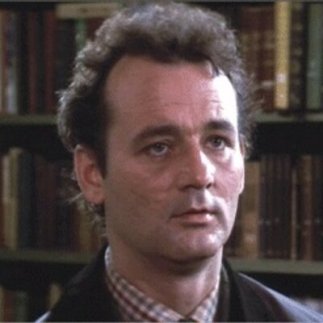
“Actually, it’s more of a guideline than a rule.”

Still here? Cool. Now we can nerd out about grammar without the eye-rolling judgment of boring people.

This will be the first in a series of recurring posts about English grammar. As a person who delights in the rules (and their exceptions), the eccentricities, and the history of the language, you’d be forgiven for assuming I’d be a crusty curmudgeon about the guidelines, norms, and other grammatical commandments. And often, you’d be right. But it also means I put a tremendous amount of brainpower into thinking about the rules.

And how I’m going to break them.

Continue reading →

Things I Did After Sitting Down To Write This Morning

This post is approximately 400 words, and likely sounds familiar to other writers.

Since the dawn of humankind, storytellers have been shaking their fists at the sky, cursing the suddenly important things that got in the way of the work. I believe they shouted something like this:

O, procrastination! Thou art a foul contra-muse who plague-eth my writing time and sendeth me on unnecessary and irrelevant paths.

That might not be a direct quote from writers of yore, but I think it’s pretty close (I’ll probably start using it myself). To be clear, I’m not talking about the demands of daily life (e.g. human interaction, food, or taking out the frickin’ garbage because you can smell it from the other room). Rather, I’m talking about those things that should be put off until the writing session has concluded. BUT OMG, THEY SUDDENLY CANNOT WAIT! THE WORLD’S FATE DEPENDS ON THAT THING BEING DONE RIGHT NOW!

Bad writer.

Stitch spray

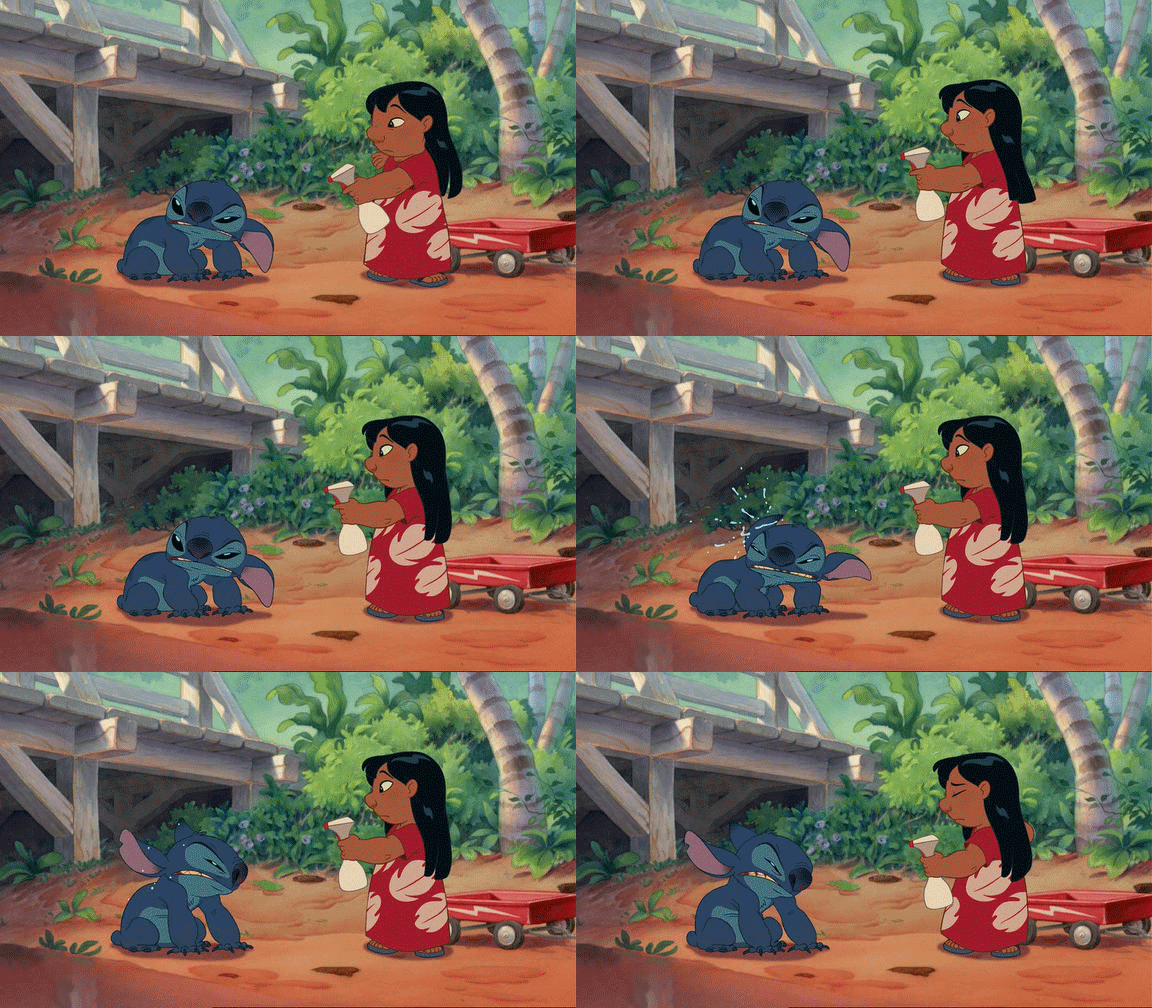
It happened earlier this week. As annoying as it always is, Tuesday was particularly disheartening because I’d taken a week off and it was one of my writing days. Consequently, my output for the day suffered.

But not all was lost. I’ve worked to make up the time and the experience gave me the topic for today’s blog. Check out my list of obviously world-saving endeavors: Continue reading →

Shine a flashlight in the dark

This post is approximately 550 words and deals with the topic of sexual assault. This isn’t some lame attempt to drive traffic to my blog by tapping into a popular social movement. That’s why I’m not using the hashtag or any other tactic to increase the visibility of the post. It’s just me, writing about something I care about, which is the entire point of this website.

On Monday, a Facebook friend boldly stated that she had not and would not participate in the “me too” movement. She meant to say that, sometimes, people don’t realize that their words qualify as harassment, and that without specific examples, we can’t correct them. But she also said, “just telling people you’ve been victimized doesn’t raise awareness.”

I disagreed.

And I think she missed the point. This movement isn’t simply about wolf whistles and “c’mere, honey”, though that’s part of it. My response received positive feedback, and so I share it here because I’m proud of what I wrote (lightly edited for this platform).


I write this as a man, and as a person who has never been sexually assaulted.

My opinion is based on women who have confided in me. Like the drunk woman who woke up naked with a man on top of her. Or the woman who lied about being on her period to avoid rape. Or the woman who kept silent for more than 20 years because she knew no one would believe her. Or the woman who blamed the rape on herself because she had a reputation for being easy.

Much like a crowd shining flashlights in the dark, this movement shows people they are not alone. That there are far more people than we ever thought. To show that such a thing might have hurt a person, but they did not let it defeat them.

I particularly disagree with the statement “we all know basically every woman has experienced” this. Regardless of whether “we all know”, the complacency of that argument is part of the problem. We still live in a culture where men and women blame rape on a woman’s attire. Or her job. Or because she is subservient to men. People dismiss “grabbing her by the p****” as locker room talk because his political affiliation says (R), when they’d give a (D) holy hell for saying the same thing.

However, this movement isn’t targeting the small-minded people, not really, because they will never change their minds. Nor is it seeking the blessing of the enlightened. I think there are many people who really aren’t aware of the size of this problem, and for that, I applaud the momentum behind this movement.

I also disagree that writing out the specifics on Facebook is a better approach. We should believe that people have been attacked without having to read the sensational details. There are myriad reasons victims don’t come forward, but recounting the attack shouldn’t be the price for my sympathy or belief.

I would have believed my friends if they had simply said, “Me too.”


It’s only a Facebook comment, and not intended to be high literature. But I believe in writing things that are important, things that connect people, and things that can make the world a better place.

I know you do, too.

–Mike


© Michael Wallevand, October 2017

Tearing down one of your primary set pieces

This post is approximately 550 words.

I’ve been coming to a realization the last few weeks, which is a poorly-written way of saying, I need to pull another large component from my story. In this instance, it’s about not writing enough words, as opposed to having too many.

This image is a printout of Devils Tower in Wyoming, on which I’ve drawn an encircling wall and shattered pinnacle. The rising smoke resulted from the serendipitous smudge of an eraser that I expanded to add dramatic flair (and hide my error). What started as a concept ended with a new story about the aftermath of a vengeful dragon attack.

wp-1489337156611.jpg

I loved the concept of a massive castle carved from the interior of a mysterious rock formation, isolated amongst desolate hills. When the image came to life, it sparked so many new story ideas, it became the primary location for the final third of the novel. I’ve spent months creating a backstory that guides me as I write scenes for Tildy and her companions.

This brings me back to my realization. If I’m being honest with myself, I haven’t done the location justice. The Last Shard is as large as a city block and eighty stories tall, which requires far more description than I’ve given it. On top of that, I only have a dozen different rooms that they visit, which feels like far too few in a structure that immense. Consequently, instead of feeling like a fully realized place, my descriptions feel more like set pieces on a stage: they’re superficial and only painted on one side.

Could I flesh it out? Absolutely. I still have unwritten ideas floating about my skull. But I don’t think I will. Adding the necessary description to the last third of the book will unbalance the entire story, not to mention slowing down the reader’s arrival at the book’s climax.

And so, I am contemplating the removal of the Last Shard. Writers dread this kind of decision. Whether it’s remembering the amount of work you’ve spent, understanding that such an interwoven component will be difficult to eliminate, or whether you’re in love with a concept, you always have to make the right decision for your readers (i.e. murder your darlings). In this book I’ve already removed two key characters and another major location, and I’m still happy with those decisions. It helps to remember that deleted scenes can return to life in another book.

If I remove the Last Shard, I still need a location, so it will likely be reduced to a stereotypical castle: familiar in exterior, though the unique elements I’ve created for the interior will likely remain. The Last Shard needs to be a primary character in a story, but this book needs the final setting to play a supporting role. I don’t think I’ll be terribly unhappy with this choice since the mythos of the Last Shard doesn’t add anything to this book. Besides, it’s kind of like putting a Death Star in your first movie: How do you ever top that?

While it might sound like I’ve already made up my mind, I’m going to sleep on this another day or two. The Last Shard and its history are so interwoven into the book, it will take careful review to fully remove it. Precision takes time and work, and I have some larger editing priorities before me right now.

–Mike


Enjoy what you just read? Leave a comment or like the post and we’ll ensure that you see more like it!

© Michael Wallevand, October 2017