Writing Update: March 12, 2017

This post is approximately 600 words.

Last night, the clock on my computer screen read 11:48 pm. Including the last two hours, I’d spent six or seven hours yesterday working on Chapter 14, a 4000-word section which in hindsight, should have had a working title of “The Long Walking Chapter Full Of Exposition”.

I required this chapter to do a lot of heavy lifting for the story: the one being told in the current book, but also in the greater overall tale I wanted to tell throughout the series.

My characters began to understand that there was more going on than a simple adventure story filled with monsters. Additionally, readers needed to know that our heroes had just one choice for sanctuary, but the destination might be only slightly less perilous than the wilderness. I had backstory about the place and needed a thorough-enough depiction so I wouldn’t have to keep describing it (I’d rather establish a scene early and as we go on, allow readers to recall as little or as much detail as they wanted to enjoy the story). We also meet two secondary characters and a few tertiary ones.

Oh yeah, and I needed to continue the character development of my three heroes. Whew.

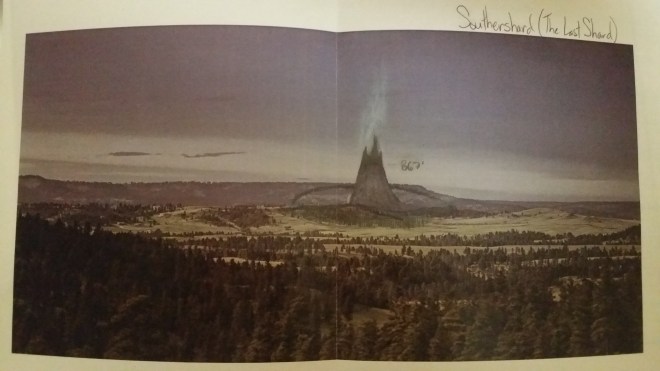
wp-1489337156611.jpg

The Last Shard (modified image of Devils Tower)

Continue reading

Writing Exercise #7: Child of the Caldera

This post is approximately 950 words.

volcano-caldera-1

Writing isn’t just about the final piece, the story you want readers to consume. It’s also about the writer herself. Or himself, in my case. If I’m bored out of my gourd, the process will be a tremendous slog, and I’ll probably never finish. But if the idea feels fresh or unusual – or requires me to do interesting research – it can be as effortless as breathing.

In this post, beyond the typical short piece of fiction I just write until the energy fades, I thought I’d list some of my motivations for exercises like this. Especially since the resulting stories are unrelated to my current manuscript. And at the end of the post, I’ve written out some ideas on the piece. It’s an evaluation of sorts, to help me determine whether I breathe additional life into the idea.

The writing exercises…

  1. Allow me to practice my craft
  2. Give me a break from the manuscript
  3. Expand an intriguing concept to see if it can stand on its own
  4. Capture an idea before it disappears forever
  5. Entertain me

Let’s see if the following piece does those things.


Child of the Caldera

September 9, 2017 – Jakarta, Indonesia

“Three weeks have passed since Mt. Meracellus exploded, ravaging the island of Ruhlu Benda and causing havoc across the region. A plume estimated to be thirty-five kilometers high has dominated the skies of Southeast Asia and deposited ash nearly a thousand miles away. Tsunamis have killed thousands of people in Vietnam, Malaysia, Indonesia, and the Philippines, with reports of damage coming from India, China, Korea, and Japan. Stories from as far away as Australia and Hawaii tell of black waves of dead sea life hitting their shores, the poisoned remnants of the volcano’s death.

Continue reading

Tpyos will always plague you

This post is approximately 450 words. Yes, the title was deliberate.

I love writing, which means I’ve spent a considerable portion of my life doing it. I’ve written thousands of pages and reviewed thousands more. If you’re like me, you’ve developed proofreading, editing, and copyediting skills. We understand that spellcheck isn’t foolproof. Long story short (too late!), we have the tools at our disposal to deliver pristine prose.

And yet, the typos return like locusts, plaguing our writing on a biblical scale.

locusts

Case in point, I recently had a friend review two chapters of my manuscript. Oh man, were these some challenging ones to write. When your protagonist is following a trail of destruction, it’s tough to keep every new discovery fresh. I was also unhappy with the amount of exposition, though I eventually found ways to make those passages feel natural. I also introduced the monster and tested the mettle of our hero. And lastly, I had finally reached the portion of the book where I’d removed one of my important secondary characters, and I needed to make additional hard decisions about his contributions to the story. These chapters hurt my writing brain. Continue reading

Writing Exercise #6: A Working Of Color

This post is approximately 200 words – short n sweet, like the mystery fruit described below.

splash-of-colors-wallpaper-1.jpgWisps of cloud diluted the perfect blue of the morning sky, reducing its rich color to a softer hue. Young leaves, bright with verdant life, glowed in the light of the rising sun. Dancing green lights they seemed, as a warm breeze awoke them from slumber. Beyond the sentinel mountain that overshadowed this valley, the sun brought the promise of a perfect day, its yellow rays coaxing vivid summer colors from all things that fell beneath its gaze.

A tentative hand reached into the branches of a tree and plucked free a large red fruit, its rind as rich and dark as blood. Not an apple was this, he knew. It was too early in the season. The fruit’s sudden appearance had surprised him, considering this was a tree long thought barren. Compulsion, not conscious thought, brought the fruit to his lips, where the sharp white peaks of his teeth pierced the rind. The fruit nearly burst from the wound, and dark purple juices ran down the man’s chin as he chewed.

Where do story ideas come from?

This post is approximately 900 words. Feel free to take a water break along the way.

Idea1.jpg

I read a lot about other writers (published or no), agents, musicians, and movie directors. I’m curious to hear from creative people, and those in creative industries, about what makes a good story. It gives me a chance to connect with others when I see that I’m doing something similar. I love to absorb any knowledge from people who are successful in their particular field.

Invariably, the question comes up: “Where do you get your ideas from?” And equally consistent, the response is a drawn out version of “I’m not really sure.” I find this fascinating because that’s exactly how I feel.

Perhaps they peer at us through the looking glass, leap out of the wardrobe, or maybe they come to us from the second star on the right, having traveled straight on till morning.

butterfly-netI used to convey a really bad simile to answer this among my writing friends. “It’s like I’m trying to catch invisible butterflies in a net with gaping holes in it. I know they are fluttering around me and only through blind flailing and luck will I capture something.”
Awful, yes, but it still felt like it answered the question for me. I know there are ideas all around me. And if I flail about at the keyboard long enough—and have a bit of luck—I will catch an idea worthy of sharing with others. That said, I do have a few moderately reliable exercises that I use. Here’s a short list of how I (try to) find my story ideas. Continue reading

Writing Exercise # 5: Flare

This post is approximately 800 words.

This is just me, writing as far as I can after starting with nothing. No ideas, save for what popped into my head right before I sat down. No plan. The only goal is to write until the baloney runs out.

*     *     *     *     *

Rosalyn Flaherty’s paternal grandparents were both Irish. As in, straight from Ireland. They’d immigrated to America after World War II to start a better life for their children. Rosalyn’s father Peter was the their fourth child, but the first American-born. He always joked about being raised in a world of green. Rosalyn suspected this wasn’t an exaggeration.

Her grandparents never let her forget her heritage, and their tutelage ranged from the history of some obscure traditional dish at supper to celebrating some forgotten holiday, the names of which usually sounded like they were clearing their throats as they taught her the proper pronunciation.

Rosalyn hated it. She hated the history. She hated the culture. She hated her ancestry. If she’d put her teenage brain to it, she’d have realized it all stemmed from her own self image. At the heart of it, she hated her milky skin and the explosion of red curls atop her head, to which she credited her fiery temper, not her contrary nature. She took it all out on everything Irish. Continue reading

Oh sweet Inspiration, I pledge my eternal lov–hey, where are you going?

This post is approximately 500 words.

Writer's Block 1.gif

I’ve spent enough time staring at blank computer screens and empty notebook pages to know that sometimes Inspiration is nowhere to be found. It also means that I’ve taken the time to develop some tools that help me coax her out of hiding. In this post I write about banking some of that Inspiration you have on Writing Day 1 to ensure you have some left when you return to the story on Writing Day 2, 3, and beyond.

I’d like to think that anyone who has done a little writing has felt the electric spark when the Idea comes Continue reading

Tighten Up Your Writing (or not?) #4

This post is approximately 400 words.

calvin-resolutionsIt’s the first day of a new year, which generally means resolutions and other pledges of life changes, blabbity-blah. I usually don’t hold to such traditions, uh, mostly because I forget my New Year’s promises before January ends. But as an idea formed in my head this morning, it occurred to me I might be writing such a post.

Yes and no. This post does contradict other guidance I’ve given about reducing words during a rewrite. But as with most other advice in life, just because you CAN do something, it doesn’t mean you SHOULD. Forsaking context or intent for the sake of brevity is an excellent way to deliver a quick read that readers misunderstand. That’s why I’m going to show the other side of word reduction. Continue reading

Writing Update: December 21, 2016

This post is about 650 words. 

It’s been a heckuva writing year.

snoopy

As 2016 comes to a close, I realize that another milestone recently passed: one year since I sat down at the keyboard to start writing again. REALLY writing, not just short notes or simple ideas that, if I’m honest, were never going to amount to anything until I took the process seriously.

I really hadn’t been taking the process seriously. Well, not for awhile at least. More than ten years ago, when the dark realities set in, I set aside another novel that I’d been writing tinkering with for years and years, starting back when I was a naïve, fresh-faced college grad with fantasies delusions about the Great American Novel. I had reams of paper manuscripts and files of all the important nouns (people, places, things). But along the way, I lost the spark. Or I became a glass-half-empty guy. Or family and work and life took priority. I stacked up a number of obstacles before myself and simply decided to get off the path: I returned to the road more traveled (apologies to Robert Frost).

That was a damn shame Continue reading

Tighten Up Your Writing #3

This post is approximately 400 words. There’d be 25% more, if I hadn’t…tightened up my writing. Yeah, that’s right: bad jokes and math on this writing blog.

Many of the writing questions I’m asked are in the category of “Where do ideas come from?” which usually elicits a response about “mommy and daddy ideas that love each other very much.”

But I also get quite a few inquiries about mechanics, which to this grammar nerd, is pretty cool. We can all put words on paper in a coherent order, but it’s challenging to do it crisply and succinctly. Especially the first time.  I rarely deliver a sentence that completely satisfies me after the first writing.

kneading

It’s like making dough: you can put the ingredients together, but if you don’t massage that lump, it’s not going to taste right. As someone who’s reviewed thousands of pages, I know that many people are satisfied with the lumpy dough of first drafts. I get it. There’s that impatience factor. But just as people are discriminating about pizza joints, so they are about books. They’ll stop coming for sub-par sustenance.

Not stopping at one draft is the key. The following examples demonstrate various ways to change up your thinking as you work through the editing process. Compare my lumpy messes to the dough I’m putting in the oven (he said, reconsidering his analogy). Continue reading